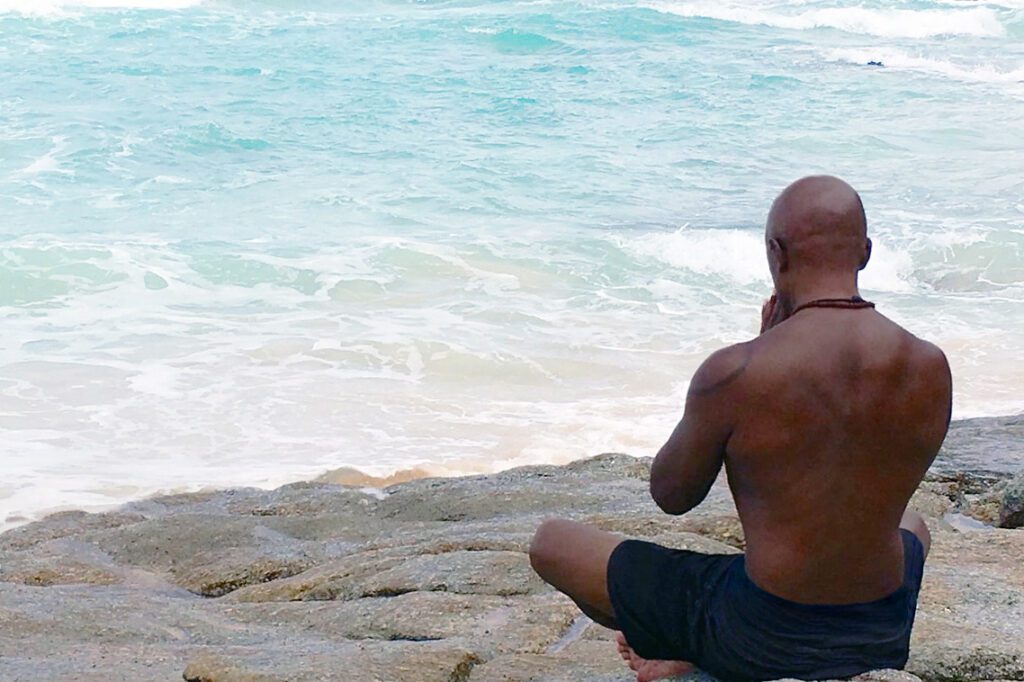
Water walking is not about speed. It is about honesty.
The resistance of the water slows every movement, forcing you to be deliberate. Momentum disappears. Instability reveals itself. Breath becomes the measure of control, not effort. This is not traditional exercise. It is meditative walking — a practice of alignment, balance, and conscious movement.
With consistent practice, the combination of slowed, mindful movement and full core activation leads to noticeable improvements in alignment, balance, and functional strength. Walking in water does not just build strength. It builds awareness, creating a foundation for better posture in daily life.
And for those who care about image, that awareness can even contribute to the visible lines of the Adonis belt. But the belt is not the goal. The belt is a receipt. The goal is something else entirely.
Why Poise Matters
Good posture naturally leads to poise — a combination of grace, balance, and composure in movement and presence. Poise reflects confidence, emotional stability, and self-control. It extends far beyond physical appearance.
An upright posture and composed movements exude self-assurance, making you appear approachable, competent, and credible. Poise aligns the body, improving breathing, circulation, and muscle function while reducing strain on the spine and joints.
A poised demeanour also fosters calmness and focus, sending positive signals to the brain and promoting emotional stability, even in stressful situations. Intentional gestures and aligned body language improve communication, making your words more impactful.
Ultimately, poise demonstrates resilience — the ability to adapt with grace under pressure. It leaves a lasting positive impression. And it begins with how you walk in water.
The Drills
Western Walk
Forward walking retrains how your foot meets the ground. Reverse walking does the opposite — demanding more control from your quadriceps, ankles, and standing leg. Water removes the impact, adds resistance, and reveals every instability between steps. Start with two rounds of 30 to 60 seconds forward, then two rounds reverse. Add a pause every few steps if you want more challenge. Breathe in for two steps, out for two steps. Keep your head level, shoulders quiet, and breath continuous. If you hold your breath, reduce the demand. The goal is not speed. It is honesty.
The Pause
Momentum hides instability. Remove momentum and every step must be owned. Step, pause, step. Pause until still. Keep your head level. Grow taller during the stillness. If you wobble, shorten your step. Do not work through instability. Own it.
Reverse Walk
Walking backward breaks the habits of forward dominance. It demands hip extension, reveals asymmetry, and teaches precision. Short steps. No backward lean. Head facing forward. If you rush, you are hiding. Slow down.
Namba Walk
Same arm, same leg. The opposite of how you normally walk. This forces your trunk to stabilise without relying on natural counter-rotation. Move slowly enough to stay organised. If your head drifts or your trunk sways, slow down before you shorten your range. Organisation first.
Noble Walk
Arms crossed or still. No arm swing to help you. Now your trunk must stabilise your pelvis on its own. Rib flare, breath holding, and posture collapse appear fast. Ribs stacked. Neck long. Breath steady. No arm help. If your ribs flare, shorten your step and reset your posture. This is posture under movement, not stiffness.
Lateral Step
Sideways walking strengthens the hips that protect your knees. It is fall-proofing disguised as walking. Step wide. Control the return. Keep your pelvis level. Do not rush. If your hip hikes or your head tilts, narrow the step.
Hurdler’s Step
High knee lift restores gait drive and tests single-leg stability. Lift, pause, place. Smooth lift. Quiet placement. Stable stance. If the placement rushes, reduce the height. Stability is the goal, not range.
Hip Rotation Step
Small circles from the hip, not the lower back. Controlled hip rotation protects knees and spares the lumbar spine. Lift, rotate, step. If the movement migrates into your back, make the circle smaller. Precision first.
Forward Kick
Hip flexion with controlled knee extension strengthens the front of your legs without impact. No backward lean. Standing knee soft. Ribs stacked. If you lean back, restore your posture and kick lower. The kick is a posture test.
Reverse Kick
Hip extension wakes up the glutes and supports knee mechanics. Short range. Pelvis quiet. No arching the lower back. Exhale as your heel presses back. Glutes, not spine.
Lunge Step
Forward lunges develop drive. Backward lunges develop control. Shallow to moderate depth. Knee tracks over the foot. Pelvis level. No wobble on the return. Backward lunges are often better tolerated in midlife. If your knee drifts inward, reduce the depth and realign.
The Doctrine
If breath is held, reduce demand. Every time.
In Summary
Poise represents harmony between inner and outer balance. Cultivating posture builds the foundation for poise, elevating confidence, communication, and overall presence.
And for those who care about image, that same practice leads to the Adonis belt. But the belt was never the prize. The behaviour was.