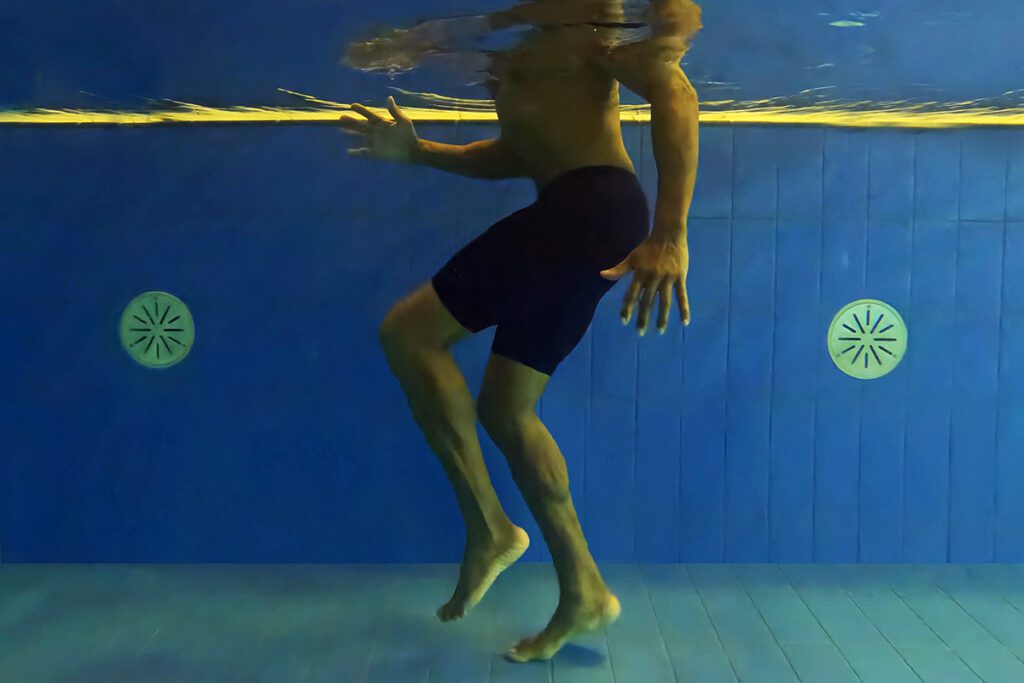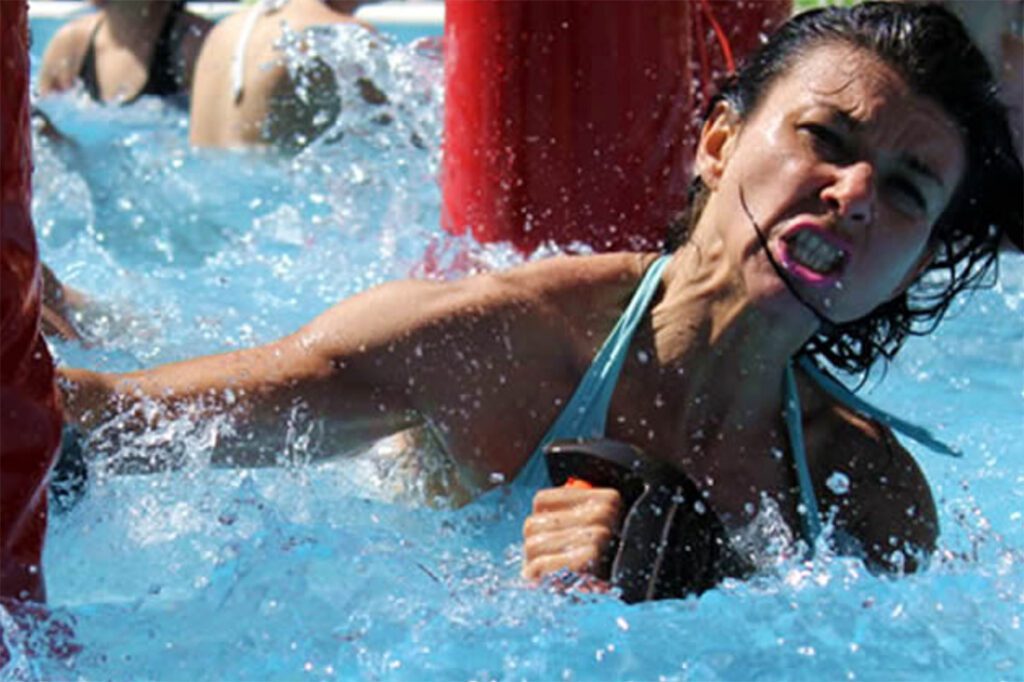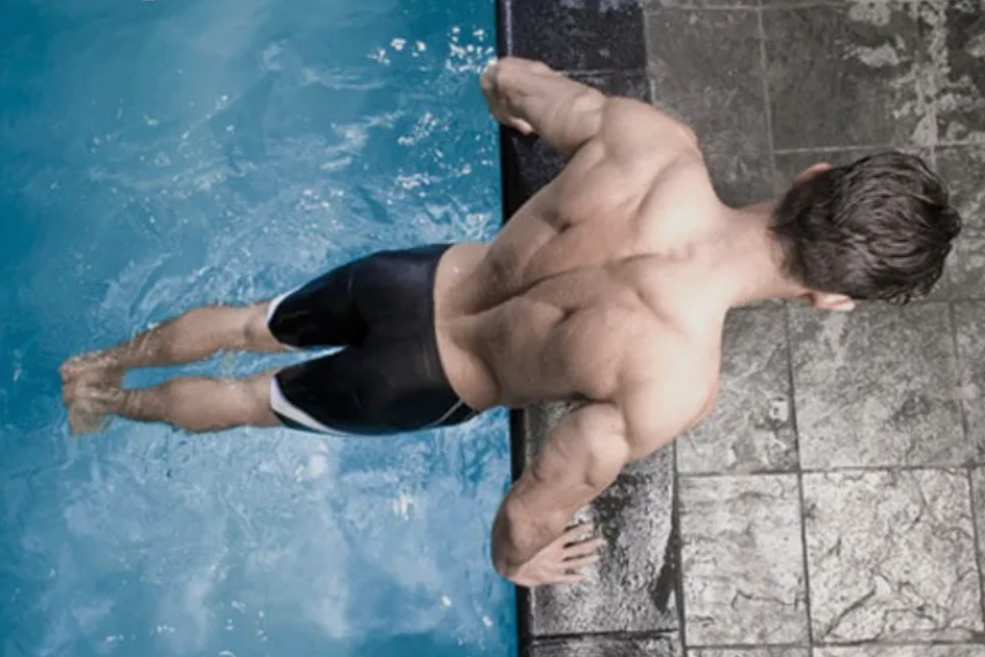
It is often argued that no single form of exercise can be considered “ultimate.” Most systems develop particular qualities, not the body as a whole.
KunAqua takes a different approach.
Rather than isolating cardio, strength, balance or core stability, it integrates them within one aquatic environment — allowing multiple systems to be challenged simultaneously without excessive joint stress.
For midlife bodies, this shift matters.
By the fifth decade, the issue is rarely motivation. It is organisation. A hip becomes subtly dominant. One knee feels less trustworthy. The lower back stiffens more easily. Recovery takes longer. Movement still happens — but small compensations begin to accumulate.
Many conventional programmes build capacity effectively. They are less equipped to correct the imbalances that develop quietly over time.
KunAqua addresses this through environment.
Integration Rather Than Fragmentation
On land, gravity assists certain phases of movement. Momentum can smooth over instability. A stronger side can quietly take over.
In water, those shortcuts are removed.
Resistance exists in every direction.
Speed increases drag.
Acceleration is self-limiting.
As a result, exercises performed in water require continuous muscular engagement through both concentric and eccentric phases. A jump squat, for example, is resisted on descent, resisted on ascent and resisted through transition. The trunk must stabilise reflexively. The hips must generate force without relying on elastic recoil. Breathing must adapt to sustained resistance.
Cardiovascular and muscular demands rise together — not separately.
Reflexive Trunk Activation
Traditional core training often relies on isolated drills: planks, crunches, bracing sequences. These can strengthen musculature, but they do not always replicate how the trunk stabilises during real movement.
In water, instability is constant. Subtle rotational forces from turbulence require continuous micro-adjustment. The pelvis and ribcage must align dynamically rather than rigidly.
Deep spinal stabilisers — including the multifidus — engage reflexively to prevent small segmental collapse. Excessive bracing becomes counterproductive. The goal is not stiffness, but controlled organisation.
For many in midlife, this distinction is significant. Visible abdominal strength is less important than restoring confidence through the spine and pelvis.
Intensity Without Compression
Water-based training is frequently mistaken for low intensity. In reality, resistance increases exponentially with speed. Move faster and drag multiplies.
This allows heart rate and muscular demand to rise without repetitive impact forces. Buoyancy reduces joint compression while muscular contraction remains high.
For individuals managing knee sensitivity, hip stiffness or spinal irritation, this enables hard training without the recovery cost associated with repeated ground impact.
Intensity remains.
Structural punishment decreases.
Load Reframed
Bone adapts to mechanical loading generated by muscle contraction. While impact can stimulate bone remodelling, strong muscular force also provides osteogenic stimulus.
In water, load is redistributed rather than removed. The hips extend powerfully. The legs drive. The trunk stabilises against resistance. Internal muscular forces remain substantial, even as external compression is moderated.
This reframing of load is particularly relevant in midlife, when joint preservation becomes as important as strength acquisition.
Coordination Over Compensation
Land-based training allows asymmetry to persist. A dominant side can contribute more force. Momentum can conceal imbalance. Speed can disguise instability.
Water reduces these options.
Drag exposes imbalance.
Turbulence reveals rotational drift.
Bilateral contribution becomes necessary.
The body cannot rely on dominance; it must reorganise.
For those seeking longevity rather than short-term output, this recalibration of coordination is foundational.
A Coherent Environment
No training system can claim universal perfection. However, within a single aquatic setting, KunAqua integrates:
-
Cardiovascular conditioning
-
Full-body resistance
-
Reflexive trunk activation
-
Balance challenge
-
Reduced joint compression
-
Neuromuscular recalibration
It layers these qualities rather than separating them.
Its distinguishing characteristic is not extremity, but coherence.
By combining buoyancy, multi-directional resistance and controlled instability, KunAqua creates an environment in which strength, endurance and structural integrity develop together.
In midlife, intelligence increasingly outweighs aggression.
KunAqua is structured around that principle — building capacity while restoring organisation, so movement remains strong, stable and sustainable over decades.