There’s a version of water most people recognise immediately.
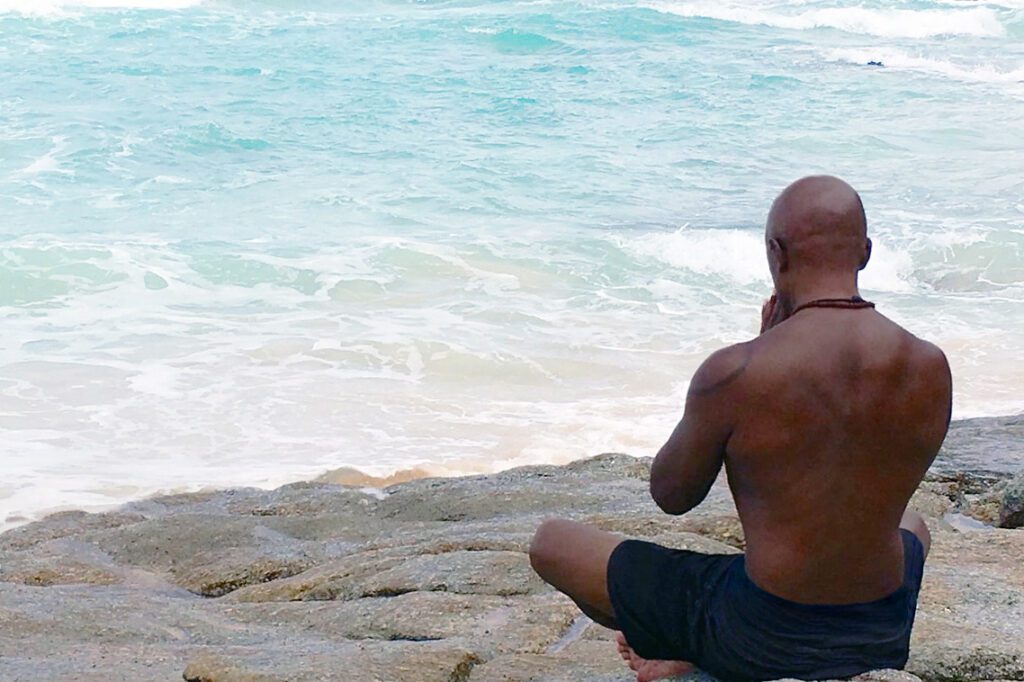
Still pools. Ocean horizons. Clean lines. Quiet luxury.
It’s the version we’ve been taught to associate with rest, recovery, even status. Water as something you arrive at. Something curated. Something framed.
But every now and then, you see a different version.
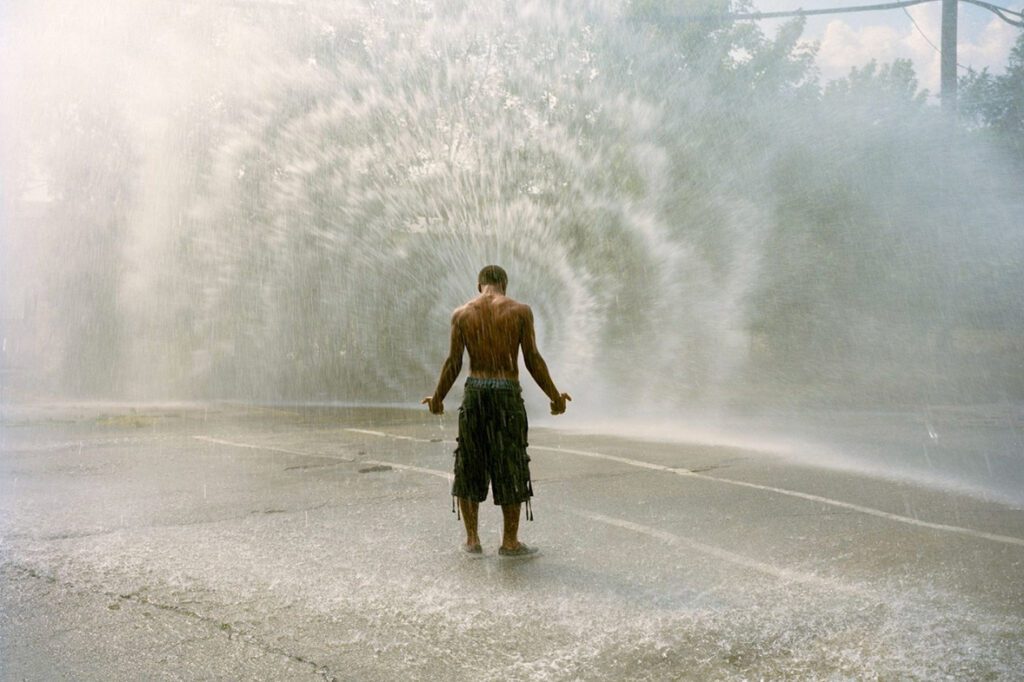
A man standing in the middle of a street as a fire hydrant bursts open around him, water exploding outward in all directions. No choreography. No intention to perform. Just a body, upright and still, inside movement.
It doesn’t look like wellness. It doesn’t look like training.
And yet, it feels closer to something real.
That kind of image stays with you. Not because it’s dramatic, but because it strips water back to what it actually is — not a setting, not an experience, but something instinctive. Something the body recognises without needing to be told.
There’s a phrase I came across through photographer Kyle McKenzie, reflecting on Paul D’Amato’s long-running body of work Water for the People. Not the ocean, not the spa, but the kind of water people find when they need it. A hydrant opened on a hot day. A moment of relief. A place where the body steps in, not to perform, but simply to be.
No one teaches you how to stand in that water.
You just do.
And that’s the part that interests me, because it tells you something important. Long before we built systems around movement — before programmes, before structure, before the idea of training — the body already understood water.
Not intellectually.
Physically.
You see it in the way people move when they’re not thinking about how they’re moving. There’s no urgency, no forcing of effort. The body adjusts. It softens where it needs to. It stabilises where it has to. It responds to what’s happening around it rather than trying to override it.
That’s not technique.
That’s intelligence.
And it doesn’t need to be taught.
It just needs to be remembered.
Somewhere along the way, we moved away from that. We built systems around load, around output, around pushing the body to produce more. And for a time, that works. The body adapts. It responds. It improves.
But over time — especially in midlife — something starts to shift.
It’s not that the body stops working. It’s that it starts asking different questions. What holds? What lasts? What are you reinforcing every time you move?
Because the issue is rarely what you can do. It’s how you’re doing it, and what that repetition is quietly building beneath the surface.
On land, you can get away with a lot. Momentum carries you. Strength fills in the gaps. Speed disguises imbalance. A stronger side takes over without you noticing. A joint absorbs more than it should. A movement looks clean, even when it isn’t.
The session feels successful.
But the imbalance deepens.
It doesn’t show itself immediately. It rarely does. It shows up later — in stiffness, in discomfort, in joints that begin to complain, not because they failed, but because they’ve been compensating for too long.
That’s the nature of drift.
The body doesn’t break overnight. It moves, gradually, out of alignment. Out of balance. Out of control.
And most training never interrupts that. It builds on top of it.
Water doesn’t allow that.
The moment you step into it, something changes. You lose momentum. You lose the ability to rush. You lose the option to hide behind speed or force. Every movement slows just enough for it to be felt properly.
Resistance doesn’t come from one direction. It surrounds you. It meets you wherever you are, in whatever way you move.
That changes the conversation completely.
Muscle doesn’t just contract and release — it works continuously. Time under tension increases without needing heavier load. The cardiovascular system is challenged, but without the impact that wears joints down. And imbalance becomes obvious, not over time, but immediately.
If one side contributes less, the movement distorts. If stability isn’t there, it shows. If alignment is off, the body tells you — clearly, and without delay.
Water reveals.
Not by forcing the body into position, but by removing the conditions that allow poor movement to pass unnoticed.
And that’s why, for the midlife body, this shift isn’t radical.
It’s logical.
Because what changes in midlife isn’t your ability to train. It’s your tolerance for how you train. The same methods that once built strength can begin to erode structure if they’re repeated without awareness. Load becomes less forgiving. Recovery slows. Compensation patterns settle in more easily and take longer to correct.
So the question isn’t whether you should stop training.
It’s whether the environment you’re training in still matches the body you’re living in.
Water does.
Not because it makes things easier, but because it makes them more honest.
There’s no spectacle to it. No performance. No chasing output for its own sake. Just movement — slowed, supported, and resisted in a way that demands organisation before intensity.
And when the body begins to organise itself again, something shifts.
Strength builds without compression. Stability develops without forcing it. Movement becomes quieter, more efficient, more controlled. Not because you tried harder, but because the environment required something different from you.
That’s where people often misunderstand it.
They think working in water is a step back. Something gentler. A reduction in intensity.
But it isn’t gentler.
It’s more precise.
It asks more of the body — not in output, but in how well it organises itself under resistance.
And that distinction matters.
Because midlife isn’t about doing more.
It’s about doing what holds.
The body hasn’t forgotten how to move well. It’s just been layered over — by habit, by compensation, by years of movement performed without needing to feel it fully.
Water strips that back.
Not aggressively. Not dramatically.
Just enough.
Enough for the body to recognise what it’s been doing. Enough to begin correcting it. Enough to rebuild from a place that lasts.
That’s the point.
Not performance.
Longevity.
Not intensity.
Organisation.
And not teaching the body something new—
but giving it the environment it needs to remember what it already knows.
Image credit: Kyle McKenzie
With reference to “Water for the People” — a long-term photographic body of work by Paul D’Amato.
There’s a version of water most people recognise immediately.
Still pools. Ocean horizons. Clean lines. Quiet luxury.
It’s the version we’ve been taught to associate with rest, recovery, even status. Water as something you arrive at. Something curated. Something framed.
But every now and then, you see a different version.
A man standing in the middle of a street as a fire hydrant bursts open around him, water exploding outward in all directions. No choreography. No intention to perform. Just a body, upright and still, inside movement.
It doesn’t look like wellness. It doesn’t look like training.
And yet, it feels closer to something real.
That kind of image stays with you. Not because it’s dramatic, but because it strips water back to what it actually is — not a setting, not an experience, but something instinctive. Something the body recognises without needing to be told.
There’s a phrase I came across through photographer Kyle McKenzie, reflecting on Paul D’Amato’s long-running body of work Water for the People. Not the ocean, not the spa, but the kind of water people find when they need it. A hydrant opened on a hot day. A moment of relief. A place where the body steps in, not to perform, but simply to be.
No one teaches you how to stand in that water.
You just do.
And that’s the part that interests me, because it tells you something important. Long before we built systems around movement — before programmes, before structure, before the idea of training — the body already understood water.
Not intellectually.
Physically.
You see it in the way people move when they’re not thinking about how they’re moving. There’s no urgency, no forcing of effort. The body adjusts. It softens where it needs to. It stabilises where it has to. It responds to what’s happening around it rather than trying to override it.
That’s not technique.
That’s intelligence.
And it doesn’t need to be taught.
It just needs to be remembered.
Somewhere along the way, we moved away from that. We built systems around load, around output, around pushing the body to produce more. And for a time, that works. The body adapts. It responds. It improves.
But over time — especially in midlife — something starts to shift.
It’s not that the body stops working. It’s that it starts asking different questions. What holds? What lasts? What are you reinforcing every time you move?
Because the issue is rarely what you can do. It’s how you’re doing it, and what that repetition is quietly building beneath the surface.
On land, you can get away with a lot. Momentum carries you. Strength fills in the gaps. Speed disguises imbalance. A stronger side takes over without you noticing. A joint absorbs more than it should. A movement looks clean, even when it isn’t.
The session feels successful.
But the imbalance deepens.
It doesn’t show itself immediately. It rarely does. It shows up later — in stiffness, in discomfort, in joints that begin to complain, not because they failed, but because they’ve been compensating for too long.
That’s the nature of drift.
The body doesn’t break overnight. It moves, gradually, out of alignment. Out of balance. Out of control.
And most training never interrupts that. It builds on top of it.
Water doesn’t allow that.
The moment you step into it, something changes. You lose momentum. You lose the ability to rush. You lose the option to hide behind speed or force. Every movement slows just enough for it to be felt properly.
Resistance doesn’t come from one direction. It surrounds you. It meets you wherever you are, in whatever way you move.
That changes the conversation completely.
Muscle doesn’t just contract and release — it works continuously. Time under tension increases without needing heavier load. The cardiovascular system is challenged, but without the impact that wears joints down. And imbalance becomes obvious, not over time, but immediately.
If one side contributes less, the movement distorts. If stability isn’t there, it shows. If alignment is off, the body tells you — clearly, and without delay.
Water reveals.
Not by forcing the body into position, but by removing the conditions that allow poor movement to pass unnoticed.
And that’s why, for the midlife body, this shift isn’t radical.
It’s logical.
Because what changes in midlife isn’t your ability to train. It’s your tolerance for how you train. The same methods that once built strength can begin to erode structure if they’re repeated without awareness. Load becomes less forgiving. Recovery slows. Compensation patterns settle in more easily and take longer to correct.
So the question isn’t whether you should stop training.
It’s whether the environment you’re training in still matches the body you’re living in.
Water does.
Not because it makes things easier, but because it makes them more honest.
There’s no spectacle to it. No performance. No chasing output for its own sake. Just movement — slowed, supported, and resisted in a way that demands organisation before intensity.
And when the body begins to organise itself again, something shifts.
Strength builds without compression. Stability develops without forcing it. Movement becomes quieter, more efficient, more controlled. Not because you tried harder, but because the environment required something different from you.
That’s where people often misunderstand it.
They think working in water is a step back. Something gentler. A reduction in intensity.
But it isn’t gentler.
It’s more precise.
It asks more of the body — not in output, but in how well it organises itself under resistance.
And that distinction matters.
Because midlife isn’t about doing more.
It’s about doing what holds.
The body hasn’t forgotten how to move well. It’s just been layered over — by habit, by compensation, by years of movement performed without needing to feel it fully.
Water strips that back.
Not aggressively. Not dramatically.
Just enough.
Enough for the body to recognise what it’s been doing. Enough to begin correcting it. Enough to rebuild from a place that lasts.
That’s the point.
Not performance.
Longevity.
Not intensity.
Organisation.
And not teaching the body something new—
but giving it the environment it needs to remember what it already knows.
Image credit: Paul D’Amato.
With reference to his long-term photographic body of work “Water for the People”