IN 1930, marine biologist Alister Hardy suggested that our ancestors were more aquatic than previously believed. His theory was controversial and dismissed by many scientists. While I’m not here to debate evolution, as a confessed water baby, I can see where Hardy came from.
I enjoy the thought of my ancestors spending more time in the water than I do, as I feel so at home in it. And I’m not alone—more than five million people in England swim at least once every four weeks.
But even if swimming isn’t your thing, plenty of other water-based activities can help you stay fit while having fun. One of the best? Aqua aerobics, as I recently discovered.
What Aqua Aerobics Can Do for You
- Great for heart health—it provides a good cardiovascular workout, gently increasing your heart rate and breathing.
- Strengthens and tones muscles—The water’s resistance ensures opposing muscle groups work together in every movement.
- Improves flexibility—The water supports your body, reducing the risk of muscle and joint injuries.
- Reduces stress—The water massages and cools you, creating a feeling of weightlessness and overall well-being.
Most pools offer aqua aerobics classes, so check with your local leisure centre or council to find one near you.
Why It’s an All-Round Workout
“You’re exercising many different muscle groups in aqua, so it’s a great all-round workout, especially for midlifers and beyond.”
Water is about 12 times more resistant than air, so your body works harder to perform the same movements. However, since the water supports you, there’s no strain on your joints or muscles. That’s why aqua aerobics is particularly beneficial for people with joint issues.
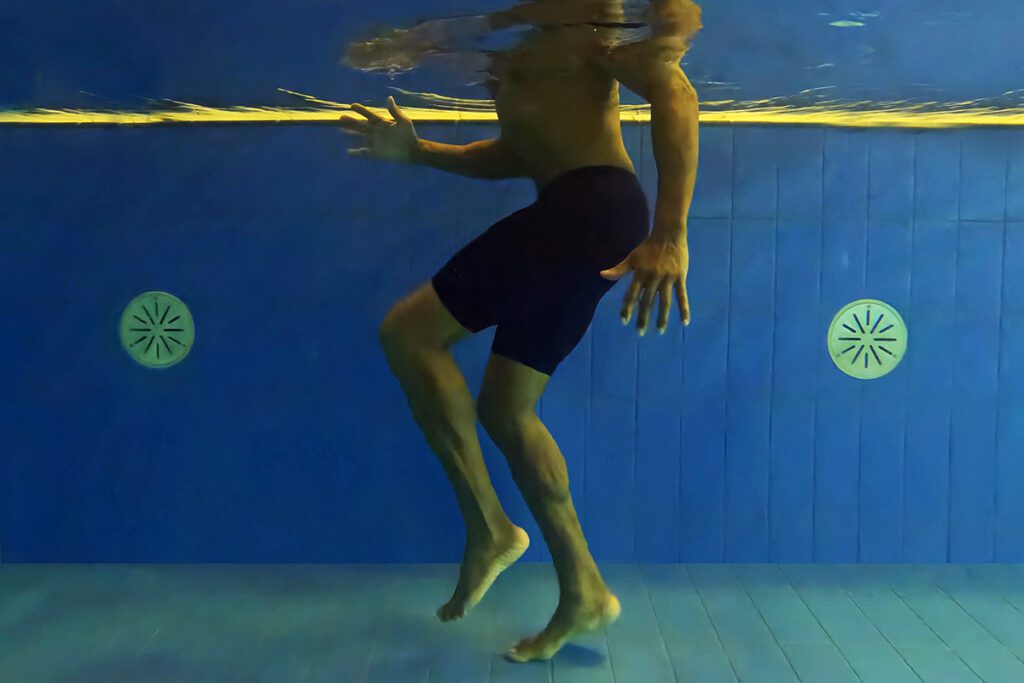
The exercises are similar to those in a regular aerobics class, including star jumps, sideways lunges, and jogging back and forth. Many participants with joint problems couldn’t jog on land, but it was much easier in the water.
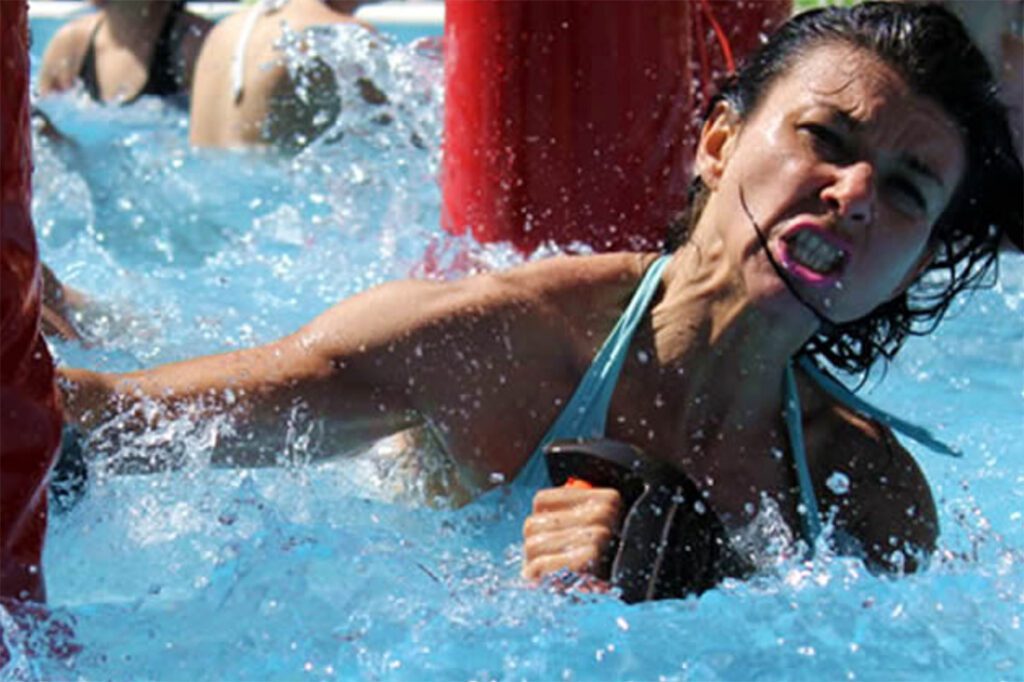
We also used foam ‘weights’—which don’t feel heavy until you push them underwater. Then, they suddenly became challenging to control, leading to plenty of laughter as we struggled to submerge them.
Double the Benefit
Unlike land-based workouts that target one muscle group at a time, water exercises work opposing muscle groups simultaneously. For example, when doing a bicep curl, your triceps engage as you push the weight back down. This means you get double the benefit with the same effort.
By the time we finished with the weights, my arms were burning. “It’s harder than it looks, isn’t it?” one participant said with a grin.
Many underestimate aqua aerobics, but once you understand the mechanics of moving in water, you realise how effective it is. After my session, I wondered why I didn’t do it more often, especially in winter when outdoor exercise seems less appealing.
What If I Can’t Swim?
You don’t need to know how to swim to try aqua aerobics. You can stay in shallow water or use a buoyancy aid.
It can be a significant first step if you want to learn to swim, as you’ll be in a controlled environment with an instructor. Many older adults never learnt to swim due to outdated teaching methods that involved being thrown into the deep end. However, it’s never too late to learn—everyone can comprehend.
Aqua aerobics is excellent for physical health and boosts mood, making you feel light, free, and energised. So why not give it a try?